Choose Tea Bag Size by Leaves, Closure, and Water Volume
Choose Tea Bag Size by Leaves, Closure, and Water Volume. Distinguish outer dimensions, dry fill weight, and recommended water volume before selecting or filling a b
Quick Answer: Tea bag size can mean outer dimensions, dry fill weight, or recommended brewing volume. Those measurements are not interchangeable. Check the exact product instructions or test an empty filter with the intended leaves, water volume, and closure before deciding whether its size suits the brew.
Bag dimensions, dose and brewing volume
- Outer dimensions
- Bag length and width, measured flat or in the specified state.
- Fill weight
- Dry contents by mass, not the visible bag area.
- Brewing volume
- Water quantity recommended for the exact product.
- Expansion check
- Wet leaf movement and closure integrity.
- No universal size
- Dimensions alone do not establish serving yield or strength.
Three different measurements hide behind tea bag size
A large empty sachet does not specify how many servings it makes. A compact filled bag does not necessarily contain less dry material than a larger format. For a reader comparing the size of tea bags, the most useful first step is to decide which measurement is needed: physical fit, dose, or the water volume for the intended brew.
Outer dimensions describe the container. Fill weight describes the dry contents by mass. Brewing volume describes the water quantity specified for the particular product or chosen trial. A listing that gives one of these has not necessarily answered the other two. A flat length and width also do not describe the same state as a filled or wet bag.
For an empty filter, look for usable filling space and how the closure works. For a prefilled bag, check contents and brewing instructions. Neither task is settled by an enlarged marketing photograph. Ask what the seller measured and in which state before comparing numerical dimensions.
A useful comparison note keeps three separate fields. For example: stated flat dimensions, stated dry contents, and recommended water per bag. Leave unavailable fields blank. Do not convert an unknown fill weight from the visible area of a bag; different cuts and blends can occupy different volumes.
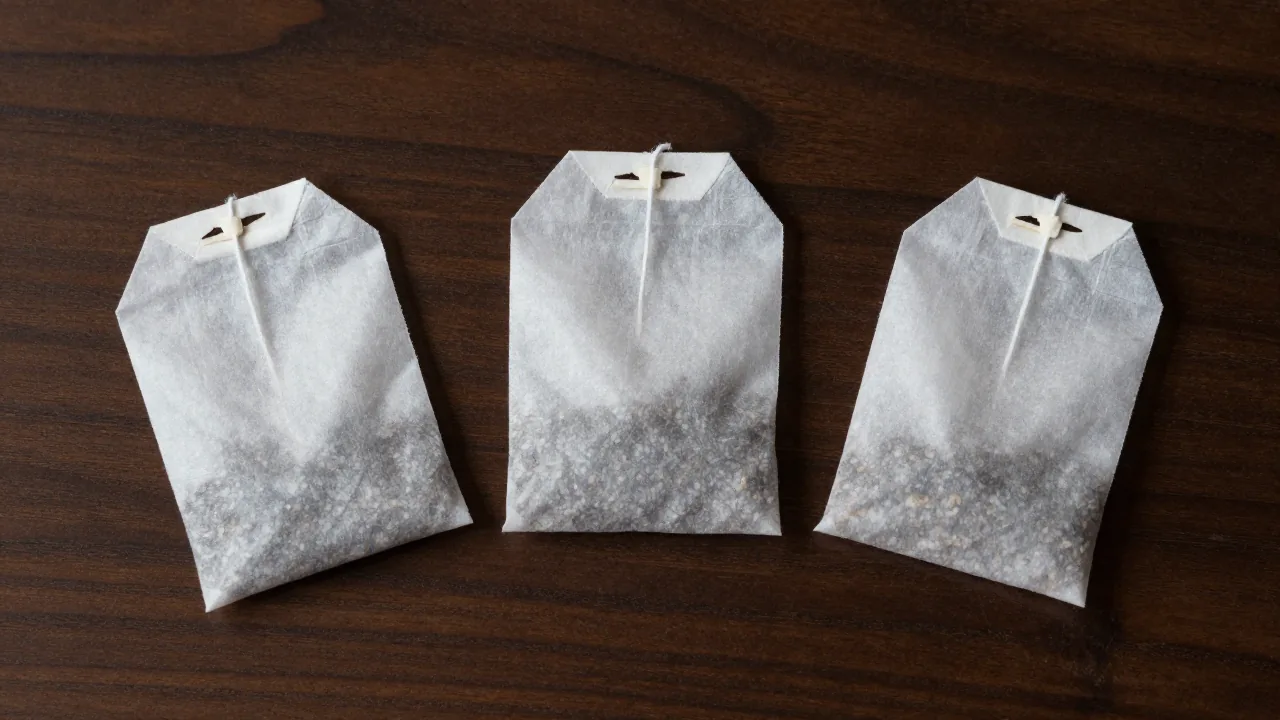
Allow leaf movement without treating a pyramid as proof
Some leaves occupy more room after wetting. A bag needs to retain its contents and permit the intended brew, but its geometric label does not prove better extraction. A pyramid, flat sachet, or drawstring filter should be assessed in its actual filled state.
For a home trial, observe whether the wet contents press against the closure, whether the bag can be lifted without spilling, and whether the opening remains secure. These are practical observations, not a certification test. Follow the product's instructions rather than inventing a universal fraction of the bag that must remain empty.
If a comparison changes both bag shape and tea contents, you cannot attribute every taste difference to shape. Keep the tea and other brewing choices consistent when that is the question you want to explore. Record any unavoidable difference so the conclusion stays limited.
A dry filter has several dimensions that a single size label may conceal. Its outer width, usable interior, closure area, and shape can affect how much leaf fits without crowding the opening. A drawstring bag and a fold-over filter of similar outer dimensions may not provide identical usable space. Compare the actual format rather than assuming that a label such as large means the same thing across products. The supporting photograph uses differently sized empty filters to illustrate this distinction; it is not a calibrated measurement or a claim that a particular filter fits every leaf quantity.
Match the bag to the actual mug or pitcher
A mug bag and a pitcher bag may have different intended doses. The Yogi product FAQ gives its own guidance of one bag per eight ounces of water. That is an example of product-specific brewing volume, not a rule for every brand, blend, or empty filter.
Read the package for the actual product you have. A bag's width does not automatically indicate whether it is designed for a single cup or a larger container. If you use a different water volume, describe that as your own trial rather than claiming the maker recommends it.
Check physical fit too. Will the bag sit in the vessel without its closure being submerged in an unintended way? Can it be removed using the supplied string or a suitable utensil? Avoid reaching into hot liquid to recover a small bag. A convenient shape is a handling consideration, not a health claim.
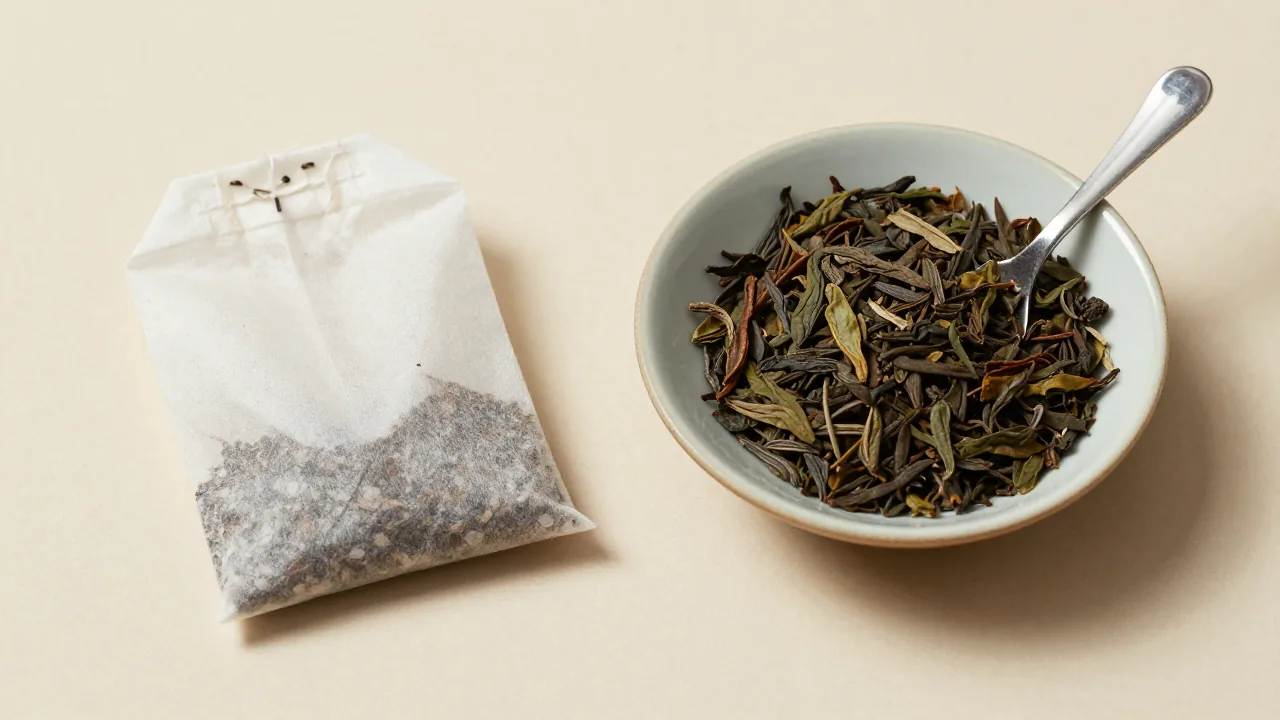
An empty filter bag needs a fill test, not guesswork
When filling an empty filter, begin with a small controlled trial using the intended contents and the filter's instructions. Do not assume that a measuring spoon of one ingredient has the same mass or occupied volume as a spoon of another. A kitchen scale can make dose comparisons more transparent when suitable for the quantities involved.
Close the bag as directed, brew using the chosen settings, and observe whether loose particles escape or the closure shifts. Distinguish an occasional fine particle from a damaged seam. An empty bag that works with coarse leaves may not work equally well with very fine material.
Keep hot-water handling ordinary and cautious. Use a suitable vessel on a stable surface, and allow safe handling of the wet bag. This guide does not recommend reusing a single-use filter, infer its food-contact suitability, or authorize a material for heating merely because it looks like paper.
For a hypothetical loose-leaf comparison, keep the tea type, leaf quantity, vessel, and preparation instructions the same while changing only the filter format. Notice whether the closure stays secure and whether the leaves have room under the intended preparation conditions. If you also change the water quantity and steeping time, a difference in the cup cannot be attributed confidently to bag size. This is an ordinary comparison method, not a laboratory extraction test. Do not use a stronger-looking infusion as proof of a health effect or as a reason to disregard the tea product's own preparation guidance.
Compare packaging information before buying
Compare the actual package description: filter material, dimensions, fill quantity if supplied, closure, and instructions. A phrase such as large tea bag needs those details to become useful. Environmental claims are separate from size and should not be inferred from color or a natural-looking surface.
A bigger package can contain more bags rather than bigger individual bags. Likewise, grams printed on a box may be a total net quantity rather than a per-bag value. Read the surrounding label before dividing or comparing. If an individual amount is calculated from total mass and count, label it as that calculation.
Check whether the item is empty or prefilled. A photograph of leaves beside a bag does not always mean the leaves are included. Do not invent contents, serving yield, compostability, or certification when the listing has not supplied them. An unavailable measurement is a reason to ask the maker, not to create a precise-looking estimate.
An empty filter's composition also belongs in the choice. Paper, fabric, and other materials can have different closures and stated uses. The maker's description should identify what the filter is intended for, including whether it is disposable or reusable and how it should be cleaned if reuse is supported. Appearance alone cannot establish that a bag is compostable, free of a particular material, or accepted by a local waste facility. Keep disposal questions separate from brewing capacity. A bag can be an adequate physical fit for the vessel while still requiring a different disposal route from the spent tea leaves.
A repeatable brewing trial for two different bag formats
To compare two bag formats fairly, use the same tea contents, a documented dose, the same vessel and water quantity, and the same chosen brewing settings, where the products allow that comparison. If their instructions differ substantially, decide whether you are testing shape under shared conditions or comparing each product as instructed. Those are different questions.
Record dimensions in the stated condition, closure behavior, escaped particles, ease of removal, and your taste preference. A preference is not proof of superior health effects or universal brewing performance. Repeat only if the first attempt left a useful question unresolved; there is no need to turn a home comparison into a laboratory claim.
The resulting decision might be specific: this filter suits this mug and these leaves at this dose. That is more dependable than saying the format always makes stronger tea. Save the instructions with the sample result so the next brew can reproduce the relevant details instead of relying on the size label alone.
The right bag size is the one that suits a documented dose and vessel with a workable closure. Keep those observations together; a larger outline on its own is not a serving, strength, or quality promise.
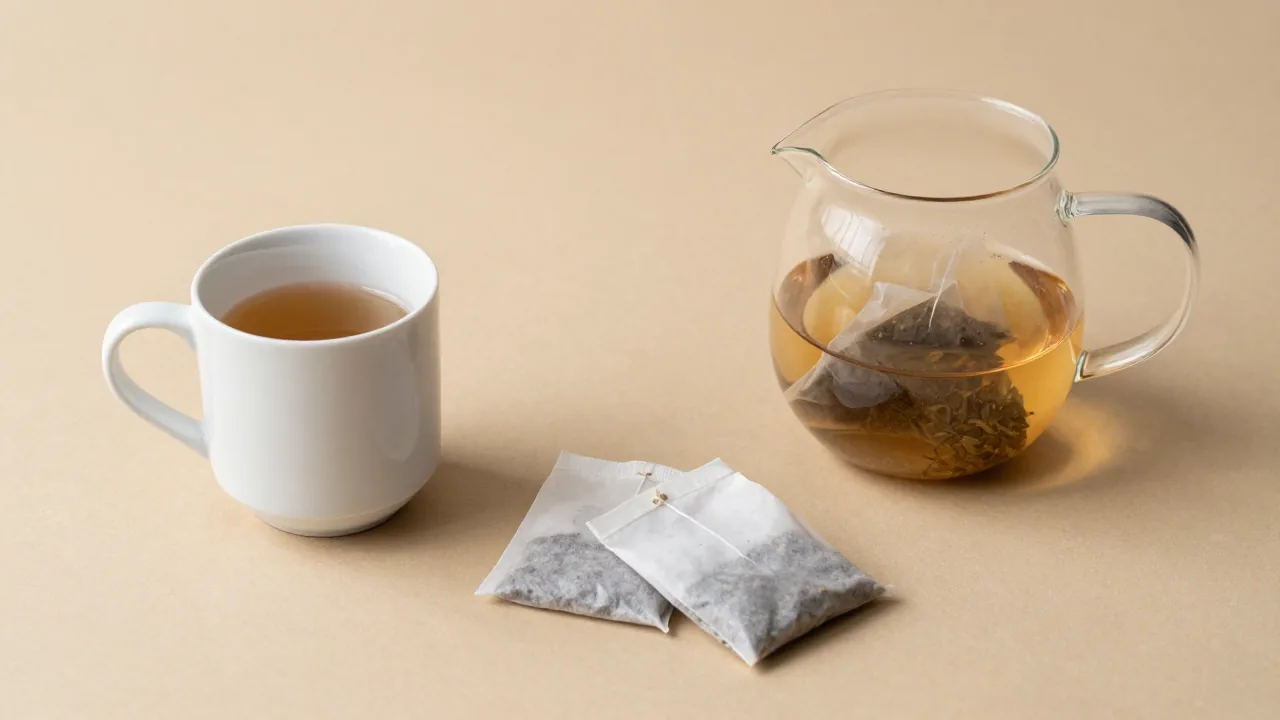
Dimensions, dose, and vessel fit
- Container dimensions, dry contents, and water volume are separate fields. For empty filters, test closure and wet fit. For filled bags, start with the exact brewing instructions.
FAQ: Choosing and filling tea bags
Do dimensions tell me how much tea a bag contains?
No. Outer dimensions and dry fill weight describe different things. Check the stated contents.
Does a pyramid bag always brew stronger tea?
No. Contents, dose, water quantity, time, and other settings also matter; shape alone does not establish that result.
Can I use a cup bag in a gallon pitcher?
Read the exact product instructions. A cup-oriented dose does not automatically supply the intended larger-volume brew.
How should I compare two empty filter sizes?
Use the intended material and a documented dose, then observe filling space, closure, fit, and removal in the actual vessel.
Are the grams on a box a per-bag amount?
Not necessarily. Check whether the label gives total net quantity or an individual dose before comparing.