Paper for Tea Bags: Material Types, Sealing, and Label Checks
Compare paper for tea bags by material type, sealing method, wet strength, brew flow, disposal labels, and product-specific evidence.
Quick Answer: Paper for tea bags usually refers to porous filter material made for infusion, sealing, and particle retention. Buyers should check fiber blend, heat-seal or fold use, wet strength, brew flow, disposal language, and product-specific certification before assuming it fits their use.
Tea-bag paper buying facts
- Primary job
- Tea-bag paper must hold dry fill, survive brewing, and let water extract flavor.
- Material check
- Fiber blend and construction matter more than a paper-like appearance.
- Seal fit
- Heat-seal, folded, and stitched bags can require different material behavior.
- Brewing risk
- Weak paper can tear, shed particles, or slow infusion too much.
- Claim boundary
- Compostable, biodegradable, and plastic-free claims need product-specific evidence.
What paper for tea bags has to do
Paper for tea bags is not ordinary writing paper. It is a porous filter material that must hold tea or herbs, stay intact when wet, and let water move through the bag during steeping.
That balance is the core buying problem. If the paper is too tight, extraction can be slow and uneven. If it is too weak or too open, fine particles may escape or the bag may tear.
For herbal blends, the check can be stricter because leaf size, powders, fruit pieces, and roots behave differently. The material decision should start with the fill, not with a generic claim on a package.
Material types to compare before buying
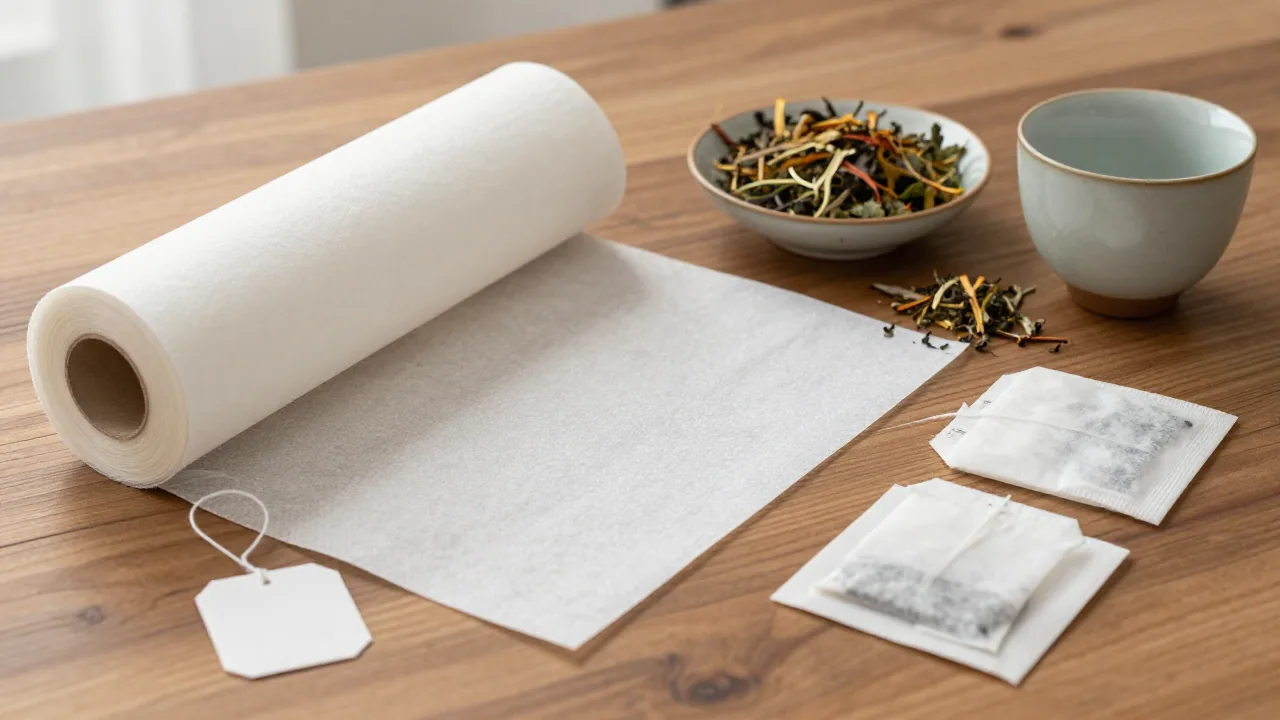
A tea-bag paper listing may mention wood pulp, abaca, cellulose fibers, or blended filter material. Those words help, but they are not enough by themselves. Buyers still need the product sheet or supplier details that explain intended use.
Look for wet strength, permeability, particle retention, and whether the paper is intended for loose tea, fine herbal particles, or larger botanicals. A material that works for whole leaves may not work as well for powdery blends.
Also separate material from claims. A paper-like look does not automatically mean plastic-free, compostable, or accepted by a local compost facility.
Sealing method changes the right paper
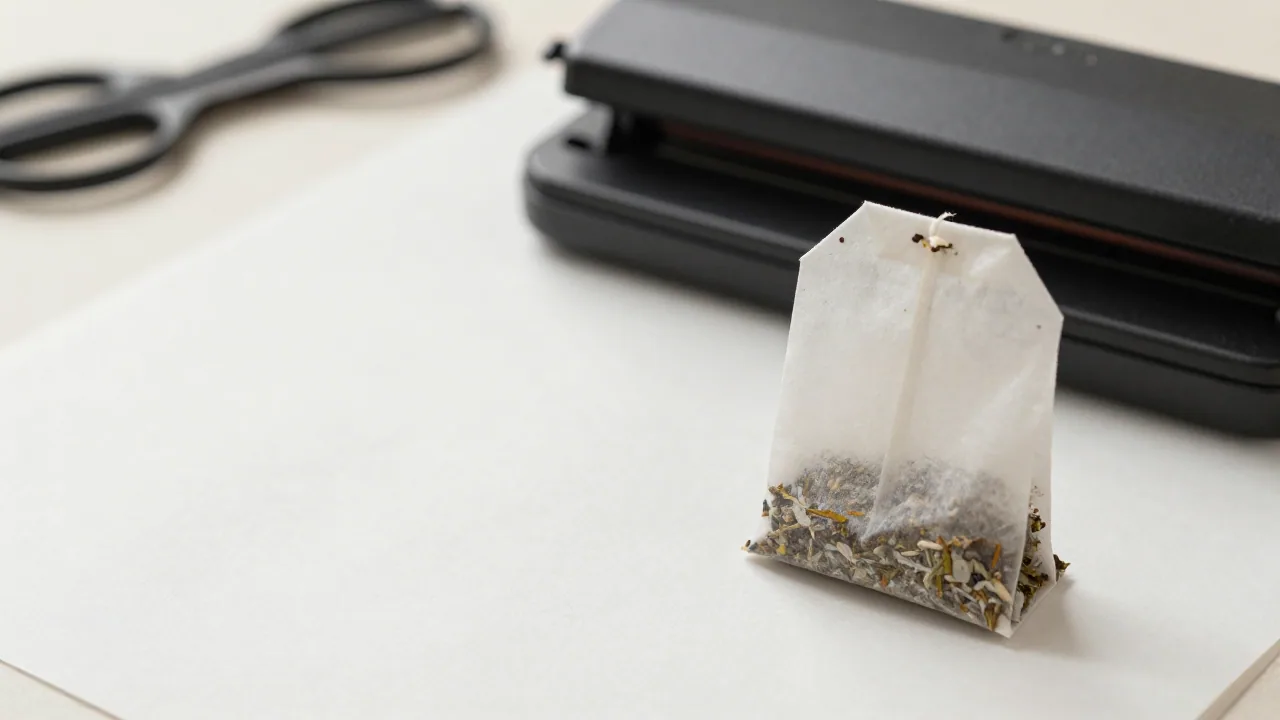
The right paper for tea bags depends on how the bag closes. Heat-seal bags need material designed for sealing. Folded or drawstring bags may rely more on shape, seams, and mechanical closure.
If a supplier sells empty tea bags, check whether they are heat-sealable, pre-sealed on three sides, stitched, stapled, drawstring, or fold-over. The same herb fill can behave differently in each format.
For home use, avoid improvising with materials not meant for brewing. The paper touches hot water and food, so the product's intended use matters.
Brewing checks: flow, strength, and particles
A practical test starts with water flow. The bag should wet evenly and let the infusion develop without trapping dry pockets. It should also remain intact through the steeping time used for that blend.
Next, check particle escape. A few tiny flecks may be normal for loose herbal material, but visible tearing, seam failure, or heavy sediment suggests the paper or closure is not right for that fill.
Finally, check handling after brewing. If the bag falls apart when lifted, the material may lack the wet strength needed for repeated kitchen use.
Label and disposal claims to verify
Disposal language needs special care. Biodegradable, compostable, plastic-free, and natural are not interchangeable terms. Local compost programs may accept some certified materials and reject others.
Before making a disposal decision, check the exact product label, supplier documentation, and local facility rules. A string, tag, staple, wrapper, or sealing layer can change the answer.
For a cautious buying note, record the bag material, closure method, supplier claim, and local disposal rule separately. That keeps the decision useful without turning appearance into evidence.
Tea-bag paper buying checklist
- Match the paper to the fill size, dust level, and steeping time.
- Confirm whether the bag is heat-seal, folded, stitched, stapled, or drawstring.
- Check wet strength and particle retention before buying in bulk.
- Verify compostable or plastic-free claims with product-specific documentation.
- Check local compost or waste rules before treating the bag as compostable.
Tea-bag paper questions
What kind of paper is used for tea bags?
Tea bags use porous filter material designed for infusion, wet strength, and particle retention rather than ordinary writing paper.
Can any paper be used for tea bags?
No. The material should be intended for hot-water brewing and food-contact use, with suitable strength and flow.
Which material details matter before buying empty tea bags?
Check fiber or material description, closure type, fill size, wet strength, permeability, and supplier documentation.
Does paper for tea bags mean compostable?
Not automatically. Compostability depends on the exact material, sealing layer, tag, string, wrapper, certification, and local facility rules.
How does sealing method affect tea-bag paper choice?
Heat-seal bags need compatible material, while folded, stitched, or drawstring bags rely on different closure behavior.