Reuse Herbal Tea Bags? Avoid Stretching Flavor Past Safe Handling
Learn when an immediate second herbal tea steep may work, why flavor fades, and when a wet tea bag should be discarded instead of saved.
You can test one immediate second steep with the same herbal tea bag, but expect a lighter cup. Do not treat a wet sachet as shelf-stable or save it at room temperature for much later; discard it whenever timing, smell, or surface condition is uncertain.
Reuse facts before a second steep
- Common mistake
- Assuming every herbal tea bag delivers the same flavor twice.
- Correct use
- If you want to test a second cup, move the bag directly into fresh hot water and expect a lighter infusion.
- Timing boundary
- An immediate second steep is different from leaving a wet sachet out for later.
- Moisture risk
- A used tea bag is wet plant material, not a dry shelf-stable sachet.
- Discard check
- When time, smell, or surface condition is uncertain, use a fresh bag.
Correct the idea that every herbal tea bag has a useful second cup
A herbal tea bag does not contain two identical cups waiting to be released. The first steep removes much of the readily soluble aroma, color, and flavor. A second steep can still produce a drink, but it is usually lighter and may emphasize different notes. Whether that cup feels worthwhile depends on the blend and your taste, not a universal promise printed on the box.
Flowers, mint leaves, cut roots, fruit pieces, and added flavorings do not extract at the same pace. Treat reuse as a small flavor test rather than a rule that every sachet must pass.
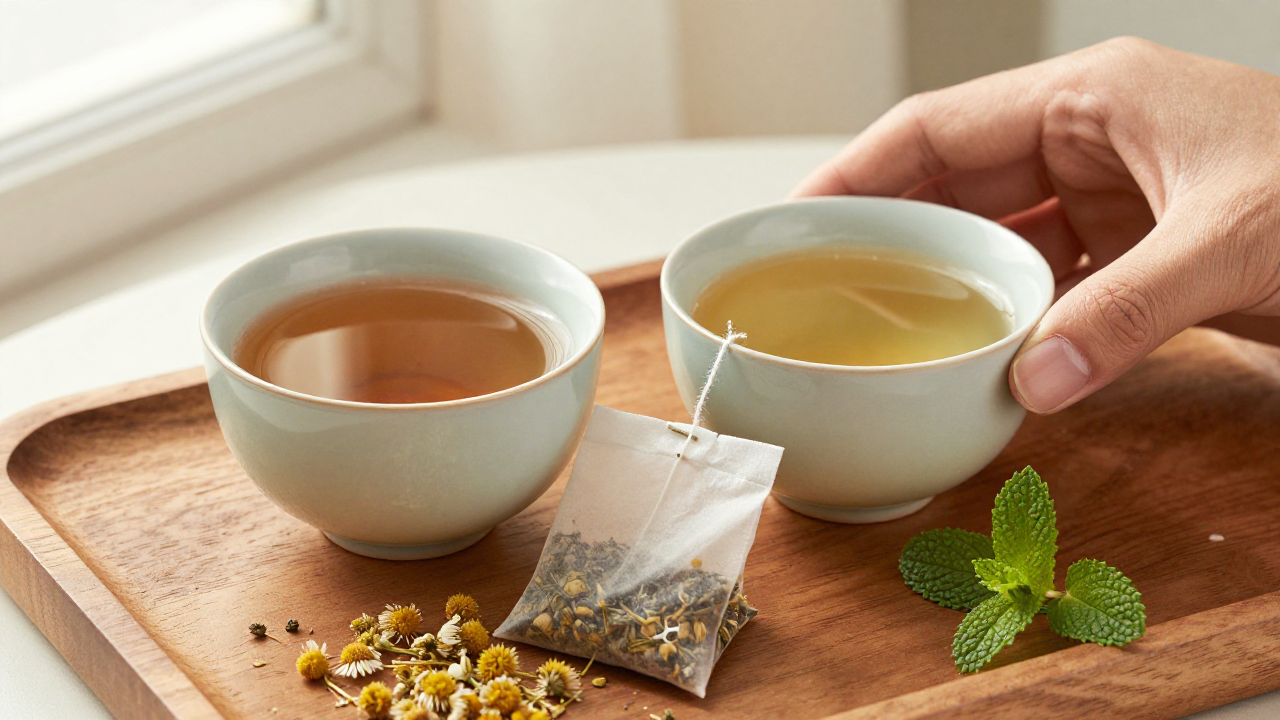
Reuse immediately if you want to test a lighter second steep
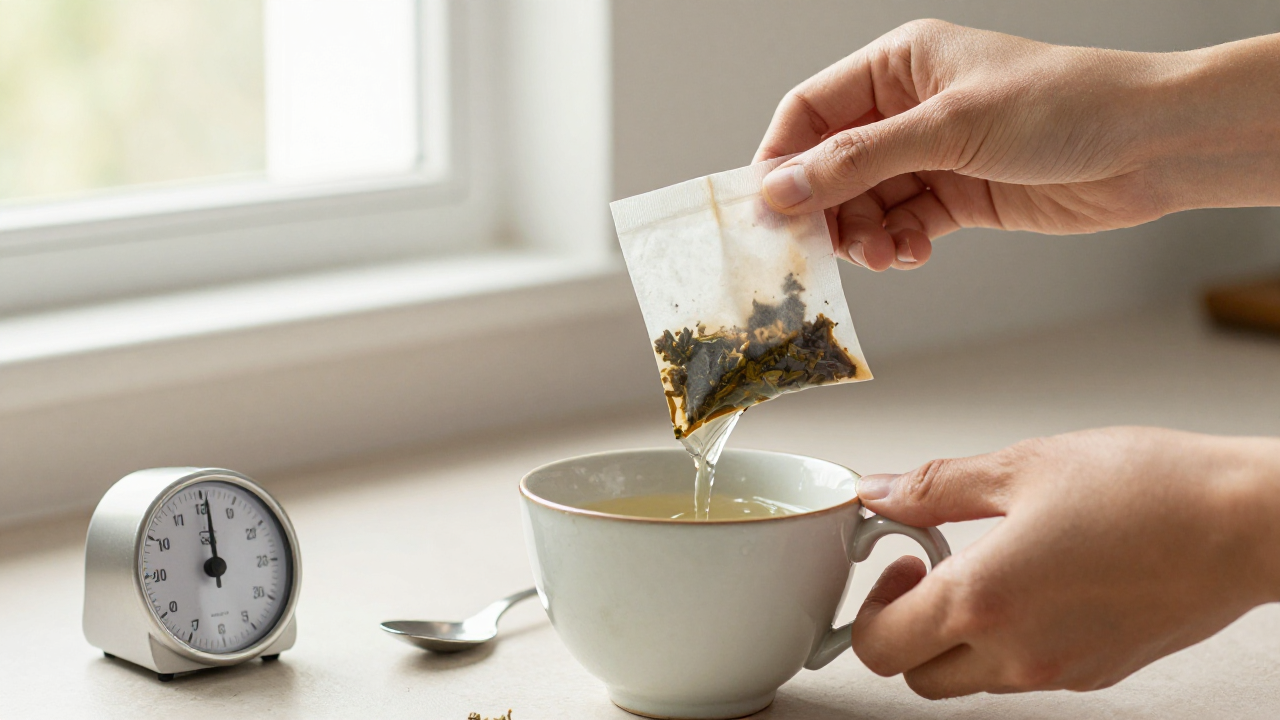
If you want a second cup, the clearest method is to reuse the tea bag immediately. Move it from the first cup into fresh hot water while the bag is still part of the same tea session. Give the second cup time to develop, then judge aroma and taste before adding sweetener or another bag.
This keeps the decision simple: one tea session, one immediate comparison. The second cup may suit someone who prefers a gentler infusion, but it should not be described as equivalent strength or value.
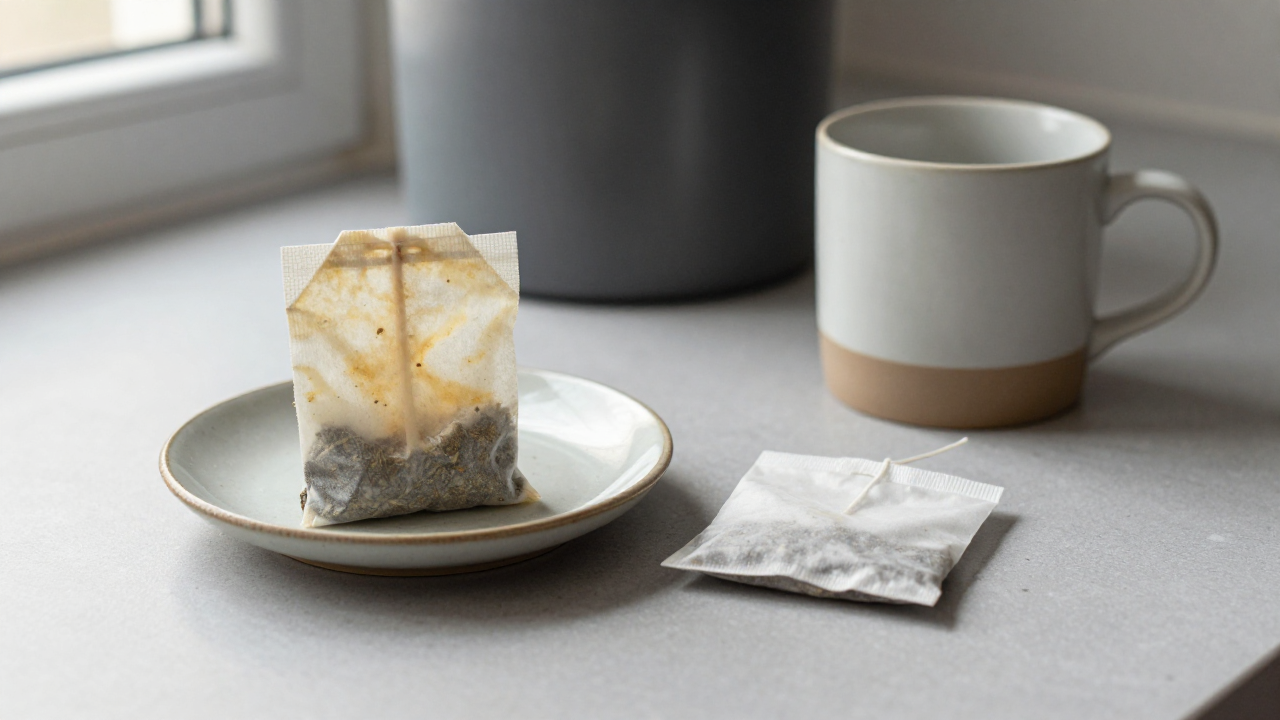
Do not store a wet herbal tea bag at room temperature for later
A wet herbal sachet is no longer the dry product that came from the wrapper. Leaving it on a saucer, desk, or counter for a later cup adds time and moisture uncertainty. That is a different practice from moving the bag directly into a second cup.
Do not rely on a quick sniff alone to turn an old wet sachet back into a fresh one. If the tea session is over, discard the used bag and begin later with a dry sachet stored according to the package directions.
Check blend ingredients because roots, flowers, and flavorings fade differently
Blend composition explains why reuse results vary. Peppermint can release a strong first aroma and a noticeably softer second cup. Dense root pieces may extract differently from delicate flowers, while flavored blends can lose their top notes quickly. Read the ingredient list so you know whether the bag contains one herb or a mixed infusion.
The label may also identify tea leaves, caffeine, sweeteners, or flavorings that change the decision. Reuse does not simplify those details, so keep ingredient questions tied to the actual package.
Use a simple disposal boundary when smell, surface, or timing is uncertain
Use a conservative boundary instead of trying to rescue every sachet. Discard a bag when it has sat wet outside the immediate tea session, when the surface looks unusual, when the smell has changed, or when you cannot remember how long it has been there. A fresh bag removes the guesswork.
This is a practical handling decision, not a medical claim. The useful distinction is between an immediate lighter second steep and uncertain storage of wet plant material.
Second-steep decision check
- Decide whether you actually want a lighter second cup.
- Reuse the bag immediately within the same tea session.
- Do not save a wet sachet on the counter for later.
- Read the blend ingredients because extraction differs.
- Discard the bag whenever timing or condition is uncertain.
Reusing herbal tea bag questions
Can you reuse herbal tea bags for a second cup?
Yes, you can test one immediate second steep, but expect less aroma, color, and flavor than the first cup.
How soon should a herbal tea bag be reused?
If you reuse it, move it directly into a second cup during the same tea session rather than storing the wet bag for later.
Can a wet tea bag be saved on the counter?
That adds avoidable time and moisture uncertainty. Discard it after the tea session and use a dry sachet later.
Why does a second herbal tea steep taste weaker?
The first steep already extracts much of the readily soluble aroma, color, and flavor, and ingredients release at different rates.