Organic Ginger Tea Bags: Ingredient Label Checks Before Buying
Learn how to read organic ginger tea bag labels for ingredients, flavor, caffeine, packaging, and use limits without health claims.
Quick Answer: Organic ginger tea bags can be a convenient way to make a warm ginger-flavored drink, but the label matters. Check whether ginger is the main ingredient, whether the blend includes caffeine-containing tea leaves, what certifications are actually stated, and how the bag and wrapper should be disposed of locally.
Organic ginger tea bag facts
- Main label check
- Confirm whether ginger is the first ingredient or part of a blend.
- Caffeine
- Pure ginger is naturally caffeine-free, but blends may include tea leaves or mate.
- Organic wording
- Look for the exact certification statement rather than assuming from package style.
- Packaging
- Bag, string, tag, wrapper, and box may have different disposal rules.
- Hard boundary
- This page gives label guidance, not medical or environmental-performance advice.
Read the ingredient order before judging the flavor
Organic ginger tea bags can range from sharp and ginger-forward to mild and blended. The ingredient list tells you which kind you are probably holding.
If ginger appears first, the cup is more likely to taste centered on ginger. If it appears after other herbs, fruit flavors, or spices, expect a softer blend.
Do not rely on front-package mood words. The back label is the useful part.
Check caffeine sources in blended ginger tea bags
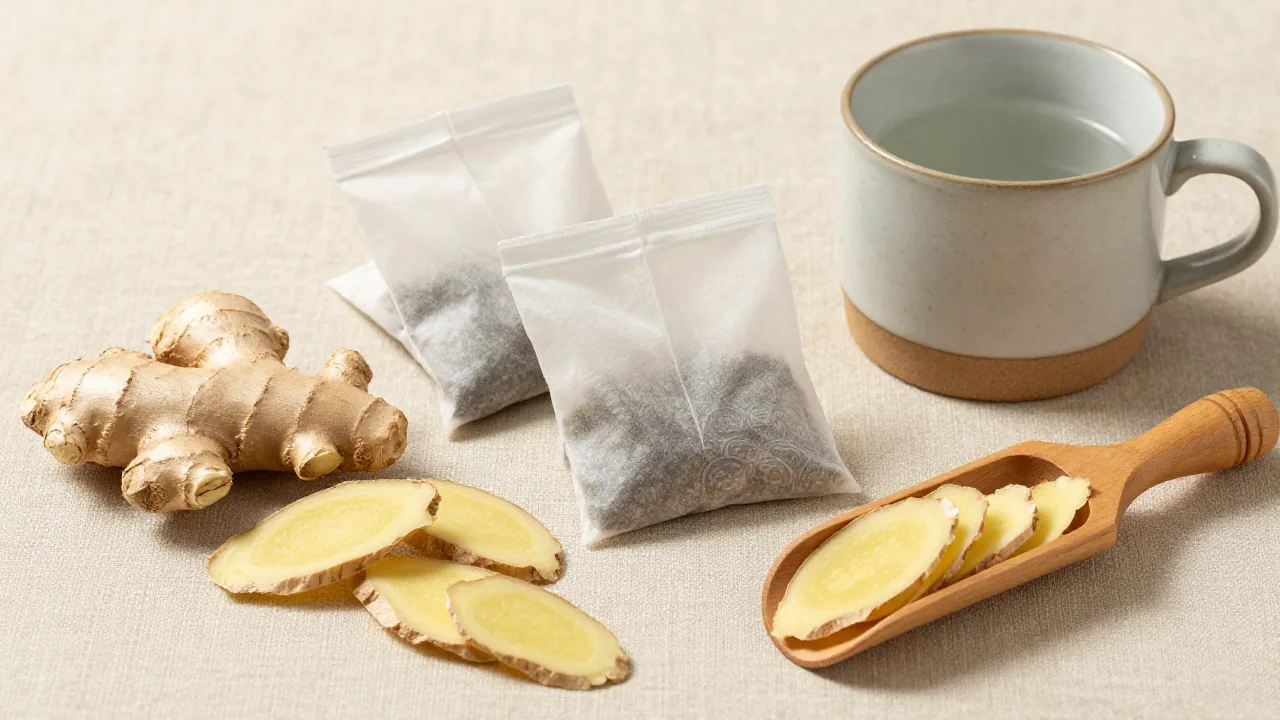
Ginger itself is commonly used in caffeine-free herbal infusions. A ginger blend, however, may include black tea, green tea, yerba mate, or another caffeine source.
If you need a caffeine-free evening cup, scan the full ingredient list instead of assuming every ginger tea bag is herbal.
This matters most when the product name emphasizes flavor rather than the base ingredient.
Separate organic certification from compostability
Organic wording says something about ingredient sourcing or certification. It does not automatically mean the tea bag, string, tag, wrapper, or box is compostable in your local system.
For disposal, look for exact material information and local facility acceptance. A biodegradable-sounding phrase is not the same as local approval.
Keep ingredient claims and packaging claims separate so the label stays readable.
Choose a bag format that fits your routine
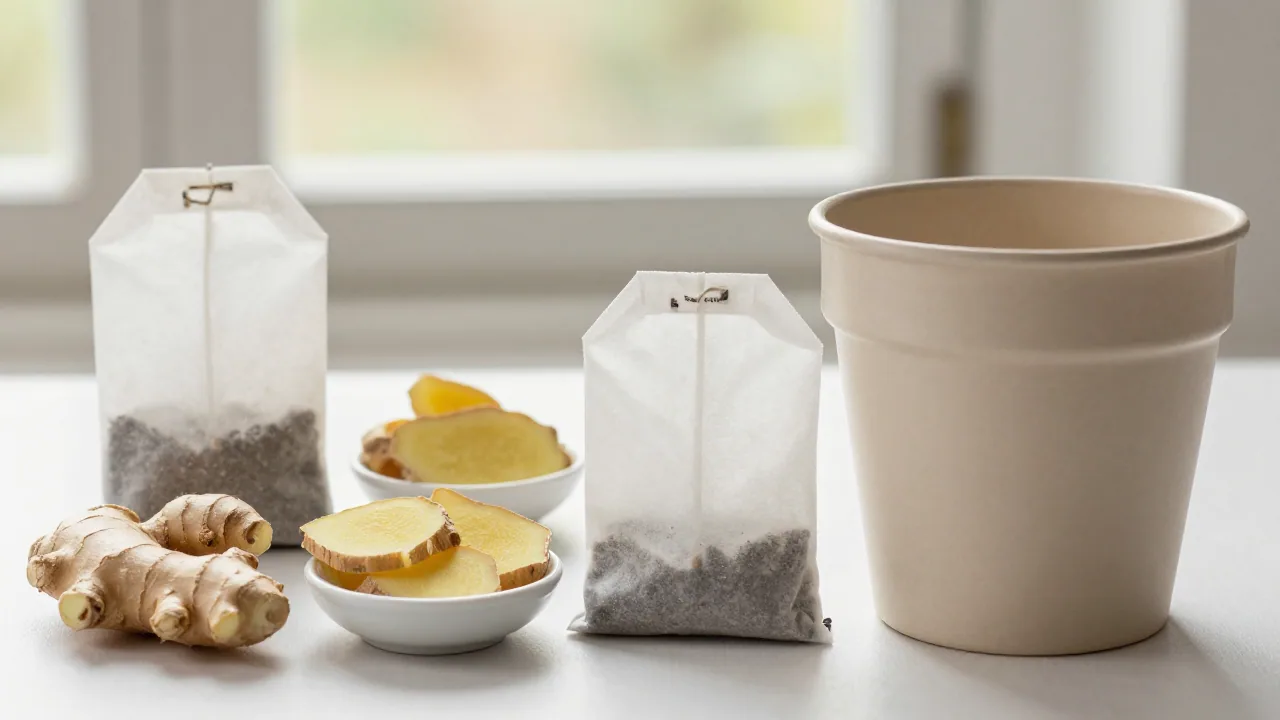
Individually wrapped bags travel well and protect aroma, but they create more packaging. Unwrapped bags can be simpler at home if you store them in an airtight container.
String-and-tag bags are convenient, while tagless bags may reduce parts to remove. The better choice depends on desk use, travel, kitchen storage, and local disposal rules.
A good label check matches your actual use case rather than chasing one universal best format.
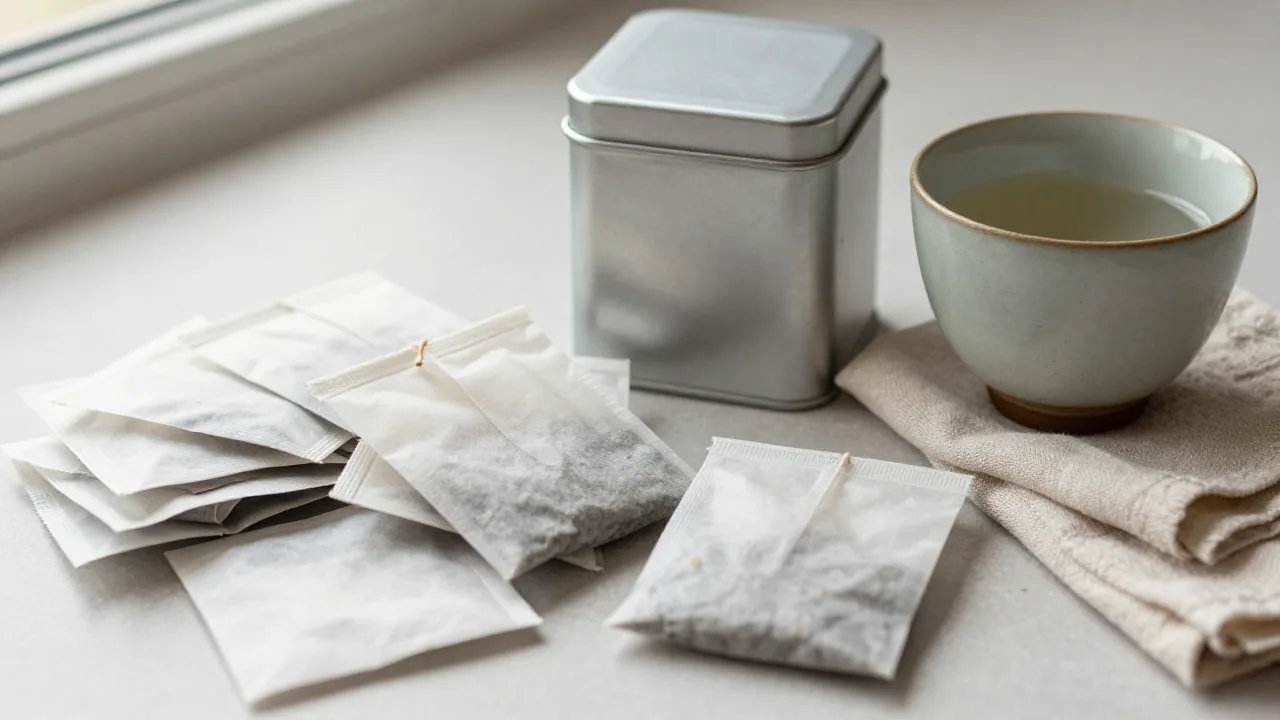
For a desk drawer, fewer loose parts may matter more than decorative packaging. For a travel bag, a sealed wrapper may be practical, but it also adds another material to sort after steeping. For a kitchen tin, blank unwrapped bags can work well if the container stays dry and the ingredient list was checked before the bags were moved.
Keep ginger tea language away from health promises
Ginger has a strong place in food and beverage traditions, but this page does not make medical claims. Do not use a tea-bag label as treatment advice.
If you have pregnancy, medication, digestive, allergy, or medical questions, bring them to a qualified professional.
For ordinary shopping, keep the decision practical: flavor, caffeine, ingredients, packaging, and routine fit.
Organic ginger tea bag checks
- Confirm ginger's position in the ingredient list.
- Check whether any caffeine source is included.
- Read the exact organic certification wording.
- Separate bag, string, tag, wrapper, and box disposal.
- Avoid treating flavor language as medical advice.
Organic ginger tea bag questions
Are organic ginger tea bags caffeine free?
Pure ginger herbal tea is typically caffeine-free, but blends may include caffeinated ingredients. Check the full label.
Does organic mean the tea bag is compostable?
No. Organic ingredient wording does not prove the bag, string, tag, wrapper, or box is compostable in your local system.
Which label detail matters before choosing organic ginger tea bags?
Read the ingredient order and any caffeine source before judging flavor or routine fit.
Can this page tell me which brand to buy?
No. It gives label checks, not brand rankings or purchase promises.
Can ginger tea bags treat a health issue?
This page does not provide medical advice. Ask a qualified professional for health, pregnancy, medication, or allergy questions.