Ginger near the front
Likely a stronger warm-spice cup, especially if paired with jujube or cinnamon-style notes.
Ingredient order helps you understand what a herbal tea bag is built around before you judge flavor, caffeine, or value.
Quick Answer: Ingredient order matters because the first ingredients usually shape the main flavor and product identity. If ginger, mint, rose, or hibiscus appears near the end, the tea may taste lighter than the front label suggests.
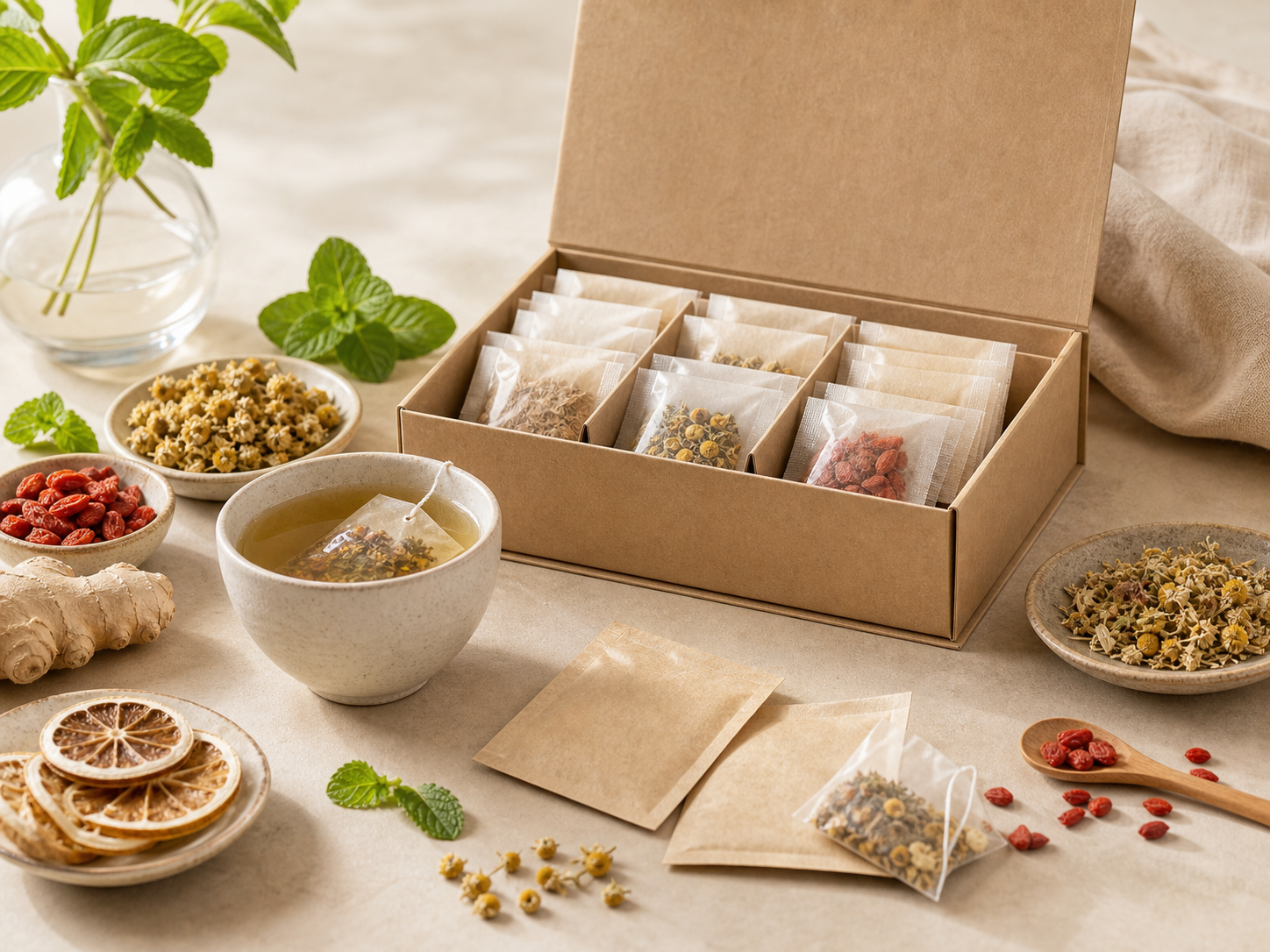
Read the ingredient list from the beginning. If the first ingredient is hibiscus, apple, rooibos, or green tea, that base will usually shape the cup. If the product name highlights ginger but ginger appears after several fruit pieces and flavorings, expect a softer ginger profile. If mint appears first, the cup may feel cleaner and sharper. Ingredient order is not a perfect taste test, but it gives a better clue than the marketing name alone.
Ingredient order does not tell you whether a tea is safe for every person, whether it has a medical effect, or whether it will match your preference. It also may not reveal exact percentages. For allergies, pregnancy, medication interactions, chronic conditions, or strong reactions to herbs, use qualified advice and product-specific warnings.
After ingredient order, check caffeine wording, serving count, steeping time, wrapper type, seller credibility, and flavor notes. These checks together give a more realistic buying decision than any single phrase.
Use ingredient order to test the front of the box. If the front says ginger, mint, rose, chamomile-style, citrus, or berry, find where that ingredient appears in the list. If it appears early, the flavor is more likely to be central. If it appears late, the flavor may be lighter or supported mostly by aroma. Also check whether the box uses broad words such as blend, flavor, infusion, or assortment. Those words are normal, but they should not replace a clear ingredient list.
Ingredient order matters most when the product name highlights one attractive flavor but the blend includes many cheaper or stronger base ingredients. It also matters when comparing gift boxes, because the recipient may expect the named flavor to be obvious. If the label is unclear, choose a product page with better ingredient transparency rather than assuming the front label is enough.
Reference: NCCIH herbs and supplement safety overview.
Likely a stronger warm-spice cup, especially if paired with jujube or cinnamon-style notes.
Likely a cleaner, sharper cup that may fit office or after-meal use.
May add aroma without making the named flavor the main taste.
Usually it matters most, but steeping time, cut size, flavoring, and blend style can change the final cup.
Not automatically. Read the whole list and choose based on transparency, preference, and any allergy concerns.
No. Caffeine status depends on the ingredients and the label statement, not ingredient order alone.
The name may highlight a small flavor note. Ingredient order helps you see whether that note is central or secondary.